
San Francisco Real Estate Market Update: Strong Demand Drives Prices Higher Heading Into Fall
As Labor Day is now in the rearview mirror, it's full speed ahead for the fall real estate market.
Although we will see an increase in inventory, I expect the year-over-year numbers to fall when looking at eventual inventory levels and the number of closed transactions. Values, however, will be up, and I expect that trend to continue through the first half of 2027.
An Unusually Active August
August is traditionally one of the slowest months for real estate activity, but it was surprisingly active this year.
The common thought among brokers was that if you had a property under $10 million ready to go to market—but were waiting until after Labor Day to list—you should bring it to market now. The reasoning was simple: buyers were ready and waiting, so why wait?
Inventory Remains Extremely Tight
The housing supply shortage continues to define the San Francisco market.
Compared with last August:
Active single-family home inventory fell 42%
Condo inventory dropped 43%
Properties are also moving quickly:
Single-family homes sold in an average of 13 days
Condos sold in an average of 20 days
Competition remains intense.
Single-family buyers are paying an average premium of 26% over asking, while condos are selling for an average of 4% over asking.
The result is a market that continues to challenge buyers while pushing home values higher.
Home Prices Continue to Climb
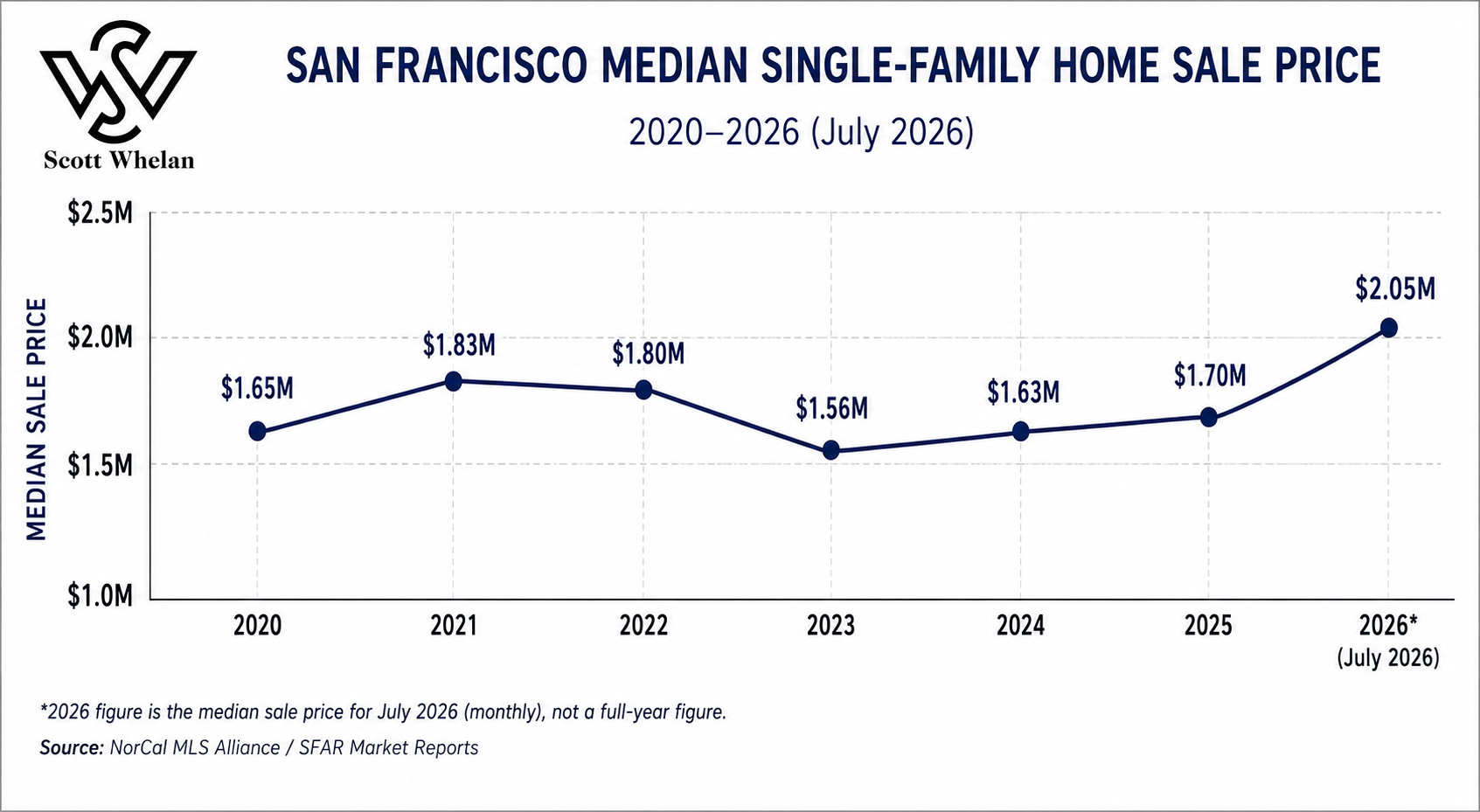
The median price of a single-family home has reached $2,050,000, up 25% year over year.
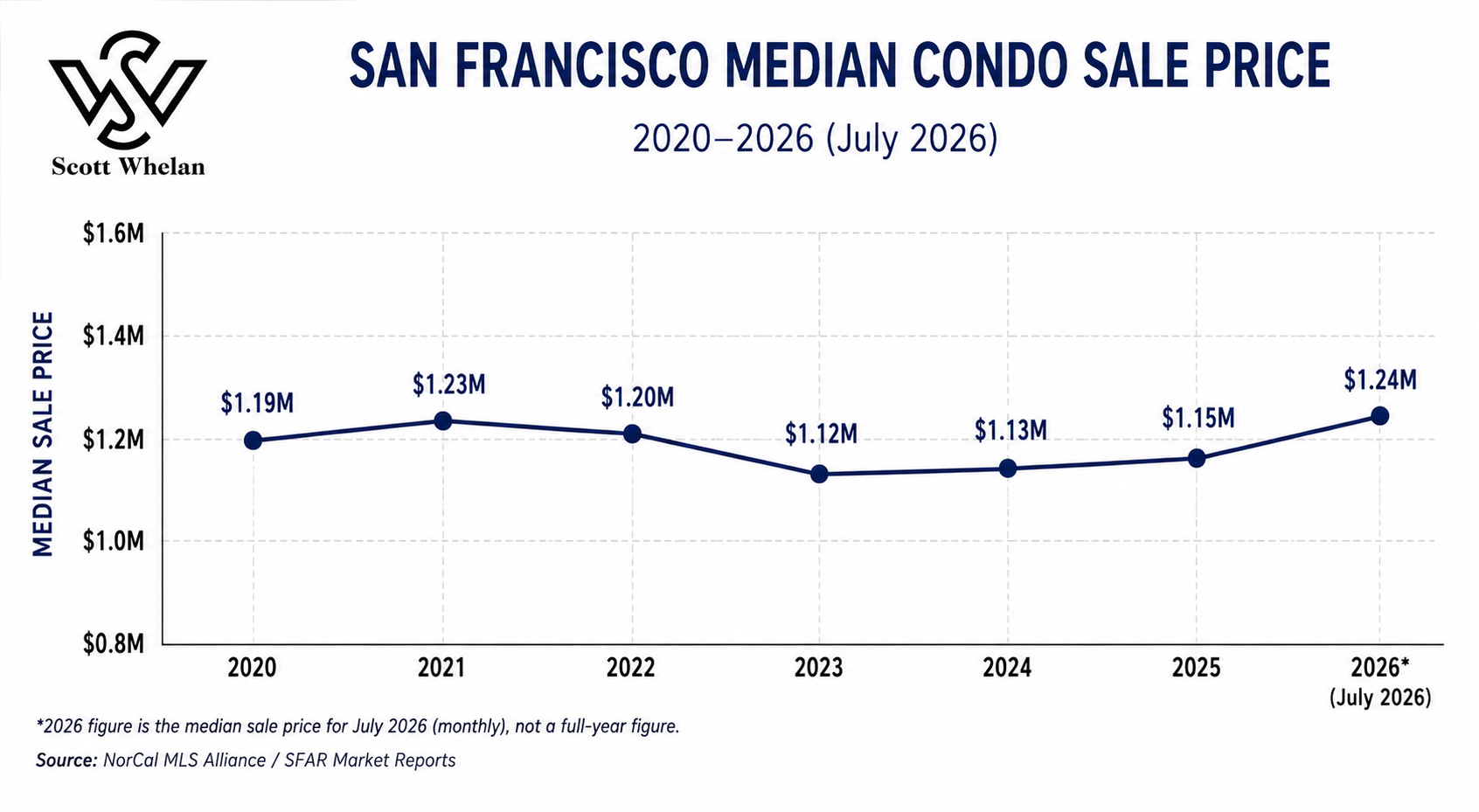
The condo market has also regained momentum. The median condo price is now $1,250,000, an increase of 9% from a year ago.
Navigating Today's Bidding Wars
Some of the bidding wars I've been involved in—as both the sellers' representative and the buyer's representative—have been very different experiences.
On the buyer side, they can be incredibly stressful.
I've submitted offers, in many cases where we are one of 10 to 15 offers, that were "clean" and well above the comparable sales. But in a market with this kind of velocity, where new comparable sales are weeks old rather than months old, and with this level of competition, responding to a multiple counteroffer with a new offer price that makes any sense can be incredibly difficult.
The conversation around increasing an offer price quickly shifts away from analysis because sometimes it simply cannot be quantified.
You are just throwing darts.
And if your agent is trying to quantify the impossible, they are no longer helping you analyze the market—they are selling you on a number.
At that point, their responsibility as your fiduciary is to make sure you understand the risks and then ask you what you want to do.
My conversations go back to the basics:
How long do you see yourself living here?
If you wanted to sell in five years but couldn't sell at a profit, are you comfortable staying longer or taking a loss?
If your offer is accepted, will you be excited—or will you immediately wonder if it was the right decision?
If you lose your job within the next six months, can you maintain your lifestyle for a year without replacing that income?
These are real-world questions buyers need to answer when they're considering paying a price that sets a new high-water mark for a neighborhood.
The Hidden Cost of Rising Home Prices
The purchase price is only part of the equation.
With the recent run-up in San Francisco real estate values—particularly in the luxury market—it's no stretch to imagine homeowners paying six-figure annual property tax bills.
For example:
$3,000,000, your annual property tax bill is $35,481
$6,000,000, your annual property tax bill is $70,961
$11,000,000, your annual property tax bill is $130,095
$20,000,000, your annual property tax bill is $236,537 (or $19,711 per month)
It's safe to say local jurisdictions benefit from constrained inventory and rising home values because they generate significant tax revenue. For homeowners, however, those annual tax bills can become a major financial burden—and I won't even dive into the cost of supplemental property tax bills.
Property Taxes Are Becoming a National Issue
Homeowner frustration over rising property taxes continues to build.
Ten states have passed legislation since early last year aimed at reducing rapidly increasing property tax bills. North Carolina, Wyoming, Florida, and Oklahoma all have some form of property tax limit or rollback on the ballot this November, while lawmakers in several other states continue debating similar measures.
New York and California, meanwhile, have taken the opposite approach, with lawmakers looking at ways to raise taxes on homeowners.
For perspective, property taxes accounted for 29% of all U.S. state and local tax collections in 2023, making them the single largest source of state and local tax revenue.
The Rental Market Is Feeling the Same Pressure
If you think buying is difficult, all of the AI ecosystem money flowing into San Francisco is also having a significant impact on the rental market.
Apartment showings are attracting large crowds, and it's no longer unusual for rental listings to generate bidding wars, with tenants ultimately paying more than the landlord's asking price.
As of September 1, San Francisco's median asking rents are:
Studio: $2,695
One bedroom: $4,195
Two bedrooms: $6,100
Looking Ahead
As we move into the heart of the fall market, I expect inventory to improve modestly while remaining well below historical norms. Although year-over-year inventory and closed sales will likely trail last year's numbers, continued buyer demand and limited supply should keep upward pressure on home values through at least the first half of 2027.
Although transaction volume may finish below last year's levels, strong competition, limited inventory, and continued demand suggest home values should remain well supported through the first half of 2027.
Call or email anytime.